Source: PCJSS CHT
url:
pcjss-cht.org
In recent days, activities of suppression and oppression on part of the administration and security and law & order forces has heightened to the alarming stage. Centering the Union Parishad (UP) elections and military operation against so-called recovery of illegal arms and extortion, arbitrary arrest, beating, harassment including communal attacks are being meted out upon the common Jumma people including the members of Parbatya Chattagram Jana Samhati Samiti (PCJSS) by the military forces and Border Gaurd Bangladesh (BGB) personnel. An ill-effort has been undertaken through filing up fabricated cases against the Jumma right activists and independent candidates of UP election including the members of PCJSS by ruling Awami League in a bid to bring out political intimidation.
It is observed that searching operation of army and BGB has been accelerated in the Upazilas, namely, Jurachari, Bilaichari, Barkal, Baghaichari, Longadu and Naniarchar under Rangamati Hill district; uapzilas of Rowangchari, Alikadam, Thanchi, Lama and Bandarban sadar of Bandarban Hill district and in Dighinal upazila of Khagrachari Hill district. Many innocent Jumma villagers including the election candidates of UP chairmen and members supported by PCJSS, have been made subjects of arbitrary arrests, beatings and harassment in these operations. The army and BGB personnel have taken to firing arbitrarily intending to create reign of terror in some areas. The Bengali settlers have conducted communal attacks upon the Jumma people and set fire in their houses at the indulgence of security forces in recent incidents.
In the on-going UP election-2016, the Awami League, the local administration, security forces, law & order agencies and the Election Commission have taken to multi-faceted conspiracy in a bid to return the ruling party-backed candidates in three hill districts of Chittagong Hill Tracts (CHT). As part of this conspiracy, the ruling party Awami League held a so-called anti-terrorism rally in Rangamati on 24 March 2016 in demand of putting an end to the extortion and recovering illegal arms in CHT with an ulterior motive to flow the prevalent situation in CHT and the ensuing UP elections in Rangamati district to different direction.
Following this move, the Election Commission, having the elections of 49 UPs in Rangamati district postponed on 29 April 2016 after expiry of submitting nomination papers on 27 April 2016 and declared the UP elections to be held by the 6th phase in June 2016. It has been learnt that the Election Commission has concluded in taking the decision on the basis of the fabricated and biased letter sent from the District Administration and at the request of Local Government Ministry. It has also been learnt that a concocted and baseless plea was mentioned in the letter of district administration alleging that the candidates supported by the political parties including the Awami League and Bangladesh Nationalist Party (BNP) could not submit their nomination papers due to armed activities of the regional political parties. The UP elections in Rangamati district was scheduled to be held at the 2nd phase on 23 April 2016.
It is worthy to be mentioned that 54 candidates for the chairman seats of UP elections became winners without contest during the 1st phase of the elections in the plain districts of the country. The BNP could not provide their candidates in 119 UPs. In the 2nd phase of the elections, the Awami League backed candidates were about to win in 13 UPs without contest. On the other side, the BNP could not provide candidates in 13 UPs. But the Election Commission did not accept these allegations for appropriate action. The Election Commission did not even postpone the elections nowhere on the ground of obstructions offered to the BNP and independent candidates although such occurrences had taken place.
On 27 March 2016, the last day for submission of nomination papers in 3rd phase of UP elections, the Election Commission claimed that there were no candidates of Awami League in 19 UPs and of BNP’s in 27 UPs under Rangamati district. Besides, Sudatta Karbari of Jibtali UP and Biswajit Chakma of Mogban UP were the single candidates in their respective UPs. Both the candidates are in their offices as the running Chairmen at the present time. Study over the on-going election situation makes it crystal clear that the allegation of offering obstruction to the Awami League candidates is absolutely baseless and politically motivated. Propaganda of the kind is being campaigned as to cripple the image of PCJSS. The ruling Awami League is in total bankruptcy of credibility and support of the mass people in CHT at grass-root level for not implementing the CHT Accord. It has been learnt that the local Awami League leaders and workers have realized the sentiment of the masses and that they dare not to participate in the elections having the ‘boat’ as the party symbol. It has also been learnt that the candidates of Awami League and BNP, instead of using their party symbols, have submitted their nomination papers as independent candidates in all UPs. The examples of chairman candidature that may be cited are ─ Amar Kumar Chakma of Balukhali UP and Pankaj Chakma Udayan of Bandukbhanga UP under Rangamati sadar upazila; Ms Mita of Jurachari sadar UP, Suresh Kanti Chakma of Bonjogichara UP, Lal Bihari Chakma of Moidung UP and Tarun Moni Chakma of Dumdumya UP under Jurachari Upazila; Binoy Chakma of Bara Harina UP under Barkal Upazila are the local Awami League leaders and candidates who have submitted their candidature as independent candidates instead of contesting under own party symbol, the boat.
With postponement of UP elections in Rangamati Hill District, the army and BGB intensified their searching operation. At the same time, various forms of harassments were unleashed against the contesting candidates and their election workers and supporters including the candidates supported by PCJSS in Bandarban and Khagrachari districts. The army and BGB began directing the people to cast their votes for Awami League candidates with threatening of dire consequences for non-compliance of their directives. Some of such incidents are mentioned herein under ─
Army searching, shops and offices vandalized in Rangamati
A group of army from Gachkabachara army camp under Dighalchari army zone of neighboring Bilachari upaziala in Rangamati district led by one Major made a thorough search in the shops and houses located in Jibtali union under Rangamati sadar upazila. During the search, the army personnel disarrayed the goods in three shops belonging to the Jumma people and vandalized two offices of the local organizations while disordering the files and papers here and there.
It has been learnt that the army personnel conducted a thorough search in three shops belonging to (1) Shubha Lal Chakma, (2) Amarjit Chakma and (3) Sukhamoy Chakma of Bhajyatali Bridge-gora area under Jibtali union at around 4:00 am that day. The search party enquired of PCJSS workers and supporters while leaving the goods squandered and spoiled. Afterward the troop conducted another search in the offices of local business organizations namely, Upajatiyo Kat and Jot Malik Kalyan Samiti at around 5:30 am and strewn the files and papers sporadically. Afterward the army also searched the rental office-room of CHT Youth Association closed by and torn the important papers and put them into a mess.
Two innocent Jumma villagers detained by army in Baghaihat
A group of army commanded by Baghaihat army Zone Commander Hyder Ali, for no reason, picked up two innocent Jumma villagers from their houses in Baghaihat-Gangaram Mukh area under Sajek union of Baghaichari upazila in Rangamati district at around 2:00 am on 8 April 2016 and put them under detention in the camp. The victims of detention are ─ (a) Bimal Chakma (32) s/o Tongla Chakma of Gangaram Duar and (b) Sachib Chakma (28) s/o Shashi Mohan Chakma of Gangram Duar. The people living in the area are in opinion that such detetion without trial has been a deliberate attempt to exhibit authorityship, bringing undue harassment and to create panic among the Jumma people.
It has been learnt that preparation for observation of ‘Bizu festval’ (national festival of indigenous Jumma peoples) was going on among the people of that area. The said two persons were also busy with the preparation. In such normal situation of festivity, the unwarranted picking up and putting the two persons under detention made the victims and the inhabitants utterly astonished. After the midnight incident of picking up the two Jummas, the local leaders and the villagers went to Baghaihat army zone office and had an effort to know whereabouts of the victims under detention. By this time, the army personnel were effortful enough to deny the fact of keeping the two under detention. At this, as the villagers had an effort to gather in mobs, the army personnel termed their postures to have been an audacity and they threatened the villagers in harsh words. But at last in the face of mass pressure including the efforts of local UP Chairman and Member Secretary of the ‘Bizu Celebration Committee,’ the commander gave in and promised to release the two victims. Afterward the said two Jumma villagers were released.
Communal Attack upon the Jumma people following the killing of three cattle businessmen in Alikadam
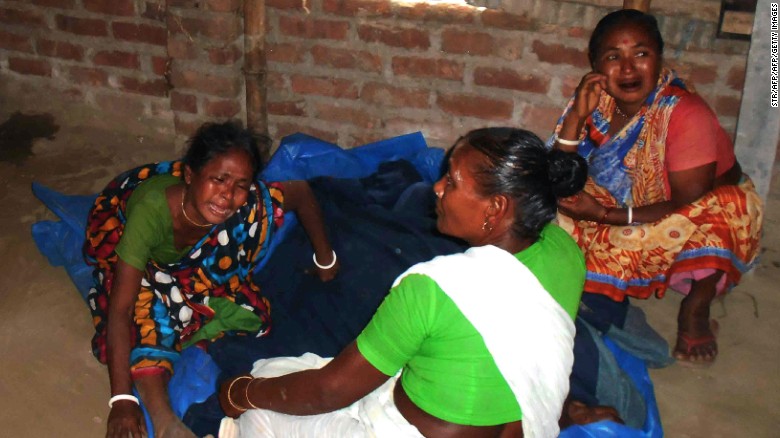
Following the incidents of abduction and killing of three persons dealing in cattle in Alikadam Upazila of Bandarban hill district, a communal attack was carried out upon the Jumma people in the Bus Terminal junction of Alikadam Upazila under Bandarban hill district on 18 April 2016. A Tripura couple sustained serious injuries in the incident. They were hospitalized in the Alikadam Hospital in critical condition.
It is mentioned that dead bodies of three cattle-businessmen namely, Abu Bakkar (40), Shahab Uddin (25) and Afsr Ali (35) were traced out from a stream of Dim Paharer of Alikadam upazila around 3:00 pm on 18 April 2016. It has been learnt that they were from Panbari area of Alikadam Upazila. The local inhabitants informed that there was prevailing tensed situation soon after tracing out the slitted dead bodies of the three business persons. Jonak Tripura and his wife were walking through the Bus Terminal area in that afternoon. By then an agitated mob attacked upon them.
On the other end, a group of Bengali settlers set fire in three houses belonging to the Jumma people in Uttar Falong Para Pan Bazaar area under Alikadam upzila in presence of army, BGB and police forces at around 6:00 pm on that day. The people whose houses were burnt to ashes are ─ Harish Chandra Tripura, Priti Rani Tripura and Chiro Moni Tripura. On that day’s afternoon, the Bengali settlers carried out communal attacks upon the Jumma people in the Pan Bazaar area and set fire in their houses. Three houses of the Tripura people were burnt down and three persons were seriously wounded. The wounded are ─
(a) Jana Chandra Tripura (40) s/o Ming Shanha Tripura and mother Sangkhima Tripura,
(b) Maria Tripura (34) s/o Hansirang Tripura and mother Hanjoni Tripura,
(c) Noberung Tripura (90) s/o Norang Tripura and mother Kotema tripura
Three PCJSS workers held and beaten by the army at Noapatang under Rowangchari
A group of army surrounded Kanaijo Para of No. 4 Noapatang Union under Rowangchari upazila in Bandarban district at around 12:00 am on 19 April 2016 and they picked up Thowaiching Marma who is a UP member freshly elected in the 3rd phase UP elections and another one named Mongbuise Marma at around 1:00 am. After picking up them from their houses, they were beaten up and put under detention and as the day breaks out, the army picked up three more persons including the Karbari, head of the village. The army took all the 5 detainees and having handed them over to Chaunu Mong Marma, the Awami League-backed UP Chairman candidate (boat symbol) in Noapotang UP, created pressure upon them directing to file up case against his opponent Mr. Aung Thowai Ching Marma (spectacle symbol), an independent Chairman Candidate supported by PCJSS. As the attempt taken by the army spelled failure in making the said 5 detainees to file up case against Aung Thowai Ching Marma, all of them were made give witnesses in the case filed with Rowangchari police station by Chaunu Mong Marma against his opponent Aung Thowai Ching Marma.
All the victims are dwellers of Kanaijo Para of No.4 Noapatang Union. They are ─ (1) Mong Bui Se Marma s/o Hlathoai Ching, (2) Thowai Ching Maung Marma s/o Maung Ba Thowai, (3) Shoi Sa Prue Marma s/o Kyaw Hla Prue, (4) Mui Sa Thui Karbari s/o Maung Hloi Marma and (5) Puching Maung Gree s/o Kyaw Ching Marma.
It has been learnt that on the basis of falsehood, the army of Antaha Para Camp led by the Camp Commander resorted to conduct such searching operation, beating and detaining the supporters of Aung Thowai Ching, so as to ensure their votes for Chaunu Mong Marma, since the army could realize the certain defeat of Chaunu Mong Marma with boat symbol in the 3rd phase UP elections 2016.
‘The Jumma Barta’ seized by BGB and 4 buyers taken to the camp and meted out harassment
The 25 BGB Zone personnel of Choto Harina Zone snatched away the whole lot of ‘Jumma Barta,’ the irregular mouthpiece of PCJSS published recently (5th Edition, November 2015 - February 2016) from the buyers in Harina Bazaar under Bhushanchara Union of Barkal Upazila in Rangamati district on 21 April 2016. Besides, 4 buyers of the Jumma Barta were taken to the camp and harassed for more than one hour and all the other buyers of the magazine including the said 4 buyers were forbidden to buy the magazine with strong words. While alleging against, the BGB personnel told the people that they feel hot-headedness aroused in them at seeing such publications.
It has been learnt that it was the market day on that day at Choto Harina Bazar. As people from different places come to the market, the PCJSS workers of Bhushanchara Union branch were selling the megazines on roaming around. After selling out lion portion of the papers, the remaining lot was kept with the shop owened by one Shanti Chakma. The security staff of BGB, Rafique came to the market at 10:20 am and snatched away the ‘Jumma Barta’ copies from some Jumma people. At certain stage, the security staff Rafique manhandled one Jumma Barta buyer named Sugata Priya Chakma (28) s/o Tarani Sen Chakma from the market and took him to the BGB zone and kept him at the checkpost. Afterward some BGB personnel got down to market and snatched off the all the copies of megazine from whoever had the copy while conducting search and they also took away the unsold copies of the paper kept with Shanti Chakma in the shop. Alongside, they also held three more buyers of the megazine and took all of them to the Zonal camp. They were ─ Baruna Sen Chakma (38) s/o Binochandra Chakma of Bhalukkya of Bhushanchara Union, Dharma Priya Chakma (32) s/o Amarjit Chakma of Lekkyachara under Bhushanchara union and one student of local Juno Pawhr High School unknown by name.
At some point, the BGB personnel took the 4 detainees and the megazines to the Zone Commander Lt. Col. Shahabuddin. The Zone Commander said in anger to the detained Jumma people: ‘Who could that be to have written these booklets! They are acting against the country while being in this land and writing against this land. As this literature tempers our heads so it is spoiling your head.’ Besides, the BGB commander also forbade buying and reading such kind of literature and ordered to inform the BGB if anybody is found selling such booklets. The BGB released Sugata Priyo Chakma after keeping him under detention for about an hour and the remaining three others were also released after a while.
Firing and torture in Jumma dwellings in the name of searching for terrorists in Baghaichari
A group of army belonging to 9 EB coming from Dighinala of Khagrachari hill district opened burst fire sporadically and threw two bombs in No.1 Rubber Plantation area adjacent to Jumma village of Baghaichari union under Baghaichari upazila in Rangamati district at around 5:20 am on 22 April 2016. Following this, they held 24 Jumma villagers and from among them the army personnel beat 5 persons mercilessly and brought out various forms of torture upon them. Alongside all this atrocities, the troop walked through the ripe pady field and brought in wide range of damage to the crops. As per information of the villagers, around 90 army personnel took part in this episode.
It was learnt that many woke up at the sudden firing sound while the villagers who were already awoken got startled. As a result of frequent firing followed by the huge sounds of bomb blusts, soon the panic spread among the villagers. At certain point, the villagers heard miking. The army personnel were saying: ‘Hello brothers! We have already surrounded you, surrender right now!’ Although the miking for surrender was voiced out towards the rubber plantation; in practice, there was none to come out, let alone the terrorists. The villagers are in opinion that it was a drama in the name of searching for terrorists staged by the army aiming at creating fright among the people.
The army personnel then held 24 innocent villagers and made them blind-folded tightly. Then, they started interrogating one by one. They enquired: ‘Where are the terrorists?’ ‘When do they come?’ ─ were the question pattern following which they released 19 persons. But the remaining 5 persons were released after interrogation and cross-interrogation with heavy torture. The 5 victims are ─ (a) Chirojyoti Chakma (45) s/o Niranjoy Chakma, (b) Boro Chakma (26) s/o Robi Moy Chakma, (c) Chitti Gulo Chakma (25) s/o Surajoy Chakma, (d) Kiran Moy Chakma (48) s/o Torlakkha Chakma and (e) Smabhu Chakma (35) s/o Surajoy Chakma.
Of the 5 victims, the person who sustained wounds comparatively as the most is Chirojyoti Chakma. It was learnt that after tying his eyes, he was asked: ‘Are you Abiskar?’ He replied in negative and as confirmation he showed his National ID card. At this, the army personnel warned him saying: ‘Eh! You have become so clever, I see!’ They insisted for arms and asked: ‘Where is the weapon?’ Saying so, they conducted search in the Almirah and in all other places they considered. But as they found nothing objectionable, they snatched off BDT 2600 from the purse of Mrs. Chirojyoti and continued beating Chirojyoti Chakma severely. Later, Chirojyoti Chakma was admitted in Marishya Hospital. The other 4 persons were also made blind-folded and tightened hands and legs and then interrogated with beating. Afterward, on their way back, the army column walked through the ripen paddy field of Jumma villagers between Baghaichari and Talukder Para causing wide damage to the crops.
Army patrolling in Jurachari
In recent days, army-BGB patrolling has also been intensified in Bilaichari and Jurachari upazilas under Rangamati district. The local people source confirmed that some unidentified-musked people have been noticed moving along with the army patrolling party moving by night in turns. A group of army belonging to Durnibar-11 Bengal commanded by Zone Commander Lt. Col. Mesbahul Haque Khan patrolled various areas under Jurachari upazila at night between 21 and 22 April 2016.
Polling center occupied, attacks upon Jumma people, houses put in flames, vandalized and looted
During UP elections held under the 3rd phase, the Bengali settlers occupied at least 3 polling centers for favor of ruling Awami League candidates, set fire in Jumma houses, vandalized, looted and beat the Jumma villagers they came across in Kabakhali Union under Dighinala upazila of Khagrachari hill district. Of the incidents, the most heineous one had been the Hachinsonpur incident in the union. Centering the dispute over ballot stuffing, the Bengali settlers attacked the Jumma people and chased them at around 2:00 pm. By this time, as one group of army from Kabakhali cantonment arrived at Hachinsonpur polling center, the settlers spread rumour to the affect that Jahangir, the Awami League chairman candidate was abducted by the Jumma people and hearing the rumour, the army held 5 Jumma villagers and beat them severely after which they took the victims to the camp in serious condition. Before leaving the place of occurrence, the army personnel set fire in the house owned by Chikkomuni Chakma (35) s/o Parimal Chakma. The house was totally destroyed in flames.
On the other hand, the Bengali settlers, having the polling centers captured, cast fake votes through ballot stuffing. The Bengali settlers put the motor bike of polling officer Shanti Moy Tripura in flames. While in an attempt to prevent casting fake votes, the Bengali settlers wounded the Presiding Officer Mukul Jyoti Chakma and Assistant Presiding Officer (Livestock Department) by severe beating. On the other side, another group of the Bengali settlers entered into the Jumma village and vandalized 5 houses including TV and other valuables and looted money. While on their way to returning, the Bengali settlers also vandalized the house and belongings of Jyotish Kanti Chakma (60) s/o Hridoy Basu Chakma. Besides, the army personnel held one Jumma villager in the Jora Bridge Polling Center and centering casting of fake votes by the Bengali settlers, a hastling took place between police and the Jumma voters.
Names and Addresses of the persons held and beaten up by the army:-
1. Joy Prakash Chakma (38) s/o Jyotir Moy Chakma, Vill: Hachinsonpur;
2. Manik Ranjan Chakma (40) s/o Trilochan Chakma, Vill: Shuknachari;
3. Swapon Chakma Boidya (25) s/o Sanchay Chakma, Vill: Uttar Tarabonya;
4. Sujan Chakma(40) s/o Jagadish Chakma, Vill: Kattalimura;
5. Dokya Chakma (30 s/o Choudhury Chakma, Vill: Duluchari.
The army released the persons mentioned above on 23 April 2016 from the camp in the evening. Although they are under treatment at Kattolimura, Sujan Chakma was admitted in the Khgrachari hospital. It has also been learnt that the army has beaten him to sustain fracture in the knee.
Names and addresses of the Jumma people whose houses and shops were vandalized and looted by the Bengali settlers:-
1. Joy prakash Chakma (40) s/o Jyotirmoy Chakma, Vill: Hachinsonpur. His house and all belongings were vandalized and looted amounting to BDT 5,000.
2. Joy Shashi Chakma (26) s/o Jyotirmoy Chakma, Vill: Hachinsonpur. All his belongings including the house were vandalized and an amount of BDT 3,000 was looted.
3. Supon Chakma (32) s/o Manindra Chakma, Vill: Hachinsonpur. All his belongings including his house and shop were vandalized and the cash box was looted.
4. Suresh Jyoti Chakma (50) s/o Satyendra Lal Chakma, Vill: Hachinsonpur. All his belongings including his house and shop were vandalized and the cash box was looted.
5. Deba Jyoti Chakma (32) s/o Chandra Kumar Chakma, Vill: Hachinsonpur. All his belongings including his house and shop were vandalized and the cash box was looted and they set the heaves of straw in flames.
Besides, it has also been learnt that the Awami League men invaded the polling centers of Mohammadpur, Bazaar High School, Bazaar Primary School, Talukder Para, Pilot Farm, Hasan Nagar, etc. of Panchari Sadar union under Panchari upazila and they returned their candidate Mohammad Nasir through ballot stuffing.
Awami League resorted to fake ballot papers in holding Bandarban UP Elections
As part of the 3rd phase UP elections, the elections in 25 UPs under Bandarban Hill district were held on 23 April 2016 through casting fake ballot papers pre-arranged by the candidates and workers of the ruling Awami League and it was utterly surprise enough to observe that the stuffed-fake-ballot papers were accounted to be legal by the administration, Election Commission and the concerned officials posted for duty and based on the fraudulence and forgery the Awami League candidates of chairmen and members were declared winners illegally. It has been learnt that as per the pre-plan, the Awami League resorted to wide-scale forgery by supplying bundles of fake ballot papers prior to election to its workers and supporters who inserted those fake ballots into the ballot box while casting their votes. For instances, the incidents given below are the evidences that unveil the misdeeds of the ruling party:
1. At least more than hundreds of ballot papers were gotten in contrast to the numbers of actual vote casting in case with the chairman candidates in every polling center. It is notable that the seal affirming the vote was stamped on the ‘boat’ symbol of Awami League candidate in the fake ballot papers.
2. No similarity was seen at all in between the legal/original and the identified fake ballot papers in respects of standard of the paper, shape, seal, code number, signature of the Presiding Officer, etc. The evidence that has been available affirmed that the fake ballot papers are a little bit thinner and smaller than the legal/original ballot papers.
In many polling centers, it happened that when protest was raised by the counter part polling agents on detection of fake ballot papers, there would take exchanging of arguments between the Presiding Officer and the Polling Agents. More issues to be wondered that as per provisions of the law, the fake ballots so detected or identified were supposed to be deposited with the Election Commission. But in practice, it was learnt that the fake ballot papers so detected and identified during counting were removed and made missing. Some of such fake ballot papers, which could not have been made possible to get inserted into the Ballot Box, came to hands of constestants.
The polling centers wherein it was possible to detect the fake ballot papers are as follows: – the numbers of fake ballot papers were 43 at No.1 Alekhyang Primary School; 7 numbers of fake Ballot papers at No.4 Kacchaptali Junior High School; 51 numbers of fake ballot papers at Kacchaptali Primary school; 12 numbers of the kind at No.7 Gurukhyang Primary School; 89 fake ballot papers at No.8 Huntuhree Primary school; and 69 numbers of fake ballot papers were identified at No.9 Bekkhyang Government primary School center. On the other side, 72 numbers of fake ballot papers were identified at No.1 Taongprue Para center under No.2 Tarasa Union while 62 numbers of fake ballot papers were detected at Chaigya Para center under No.2 ward of No.2 Tarasa Union.
Besides, at No.1 Roangchari Model Government Primary School center under No.1 Roangchari Sadar Union, more than 500 excess ballot papers were received in contrast to actual numbers of casting. As delay in declaring the result continued even beyond 9:00 pm, the workers and supporters of the independent candidate Aung Soi Prue Marma (pineapple symbol) returned back to their homes for being vexed, the administration and the concerned officials declared the ruling party candidate to be winner as their whims and wishes.
Further more, 62 numbers of fake ballot papers were identified at No.2 Ward Kengrachari Government Primary School center under No.1 Rajvilla Union. When Usuinue Marma, the polling agent of the independent candidate Mongpu Marma demanded cancellation of the detected fake ballot papers, the Presiding Officer got him out of the room but later on, the officer had to cancel those fake ballot papers in the face of protest of the people.
Similar cases of fake ballot detection happened with the centers namely, No. 1 Kenaijo Government Primary School, No.2 Antaha Government Primary School, No.3 Gongjak Headman Government Primary School, No.4 Nachalang Government Primary School and No.6 Purbapara Government Primary School. But holistically, despite detection of fake ballot papers that took place in most polling centers, the Presiding Officers, Assistant Presiding Officers and the Polling Officers befooled the polling agents and declared the fake ballot papers to have been legal and through this malpractice, they continued conspiring for finding out means and ways to declare the ruling party candidates winners. In order to materialize the conspiracy freely, the law & order forces opened blank fire during vote counting at Sualok center of Bandarban sadar upazila and at Bolipara canter of Thanchi upazila to drive away the workers and supporters of the independent candidates. At this 4 Jumma women were wounded at Sualok. The Chatra League (student wing of ruling Awami League) workers were also allegedly involved in an effort to attack upon the Jumma people with battons and sticks.
With exception to the said 4 unions, the ruling party Awami League candidates were declared winners in all other unions in Bandarban district while deceiving the people and trampling down the constitutional right of the people by way of applying such innovative maneuver of forgery using the fake ballot papers, muscle power and state mechineries. Seeing the way of fake voting using the fake ballot papers has made the people of Bandarban speechless and wondered. Undoubtedly, this has been a farcial election and that the election is absolutely a deception and illegal.
Under this circumstance, the PCJSS and independent candidates demanded for cancellation of election in those polling centers where the fake ballot papers were detected and to hold re-election in those centers and having the leaders and workers of Awami League including the persons concerned involved in the crime arrested, to step up legal step with iron hand immediately.
PCJSS & PCP members attacked by Awami League miscreants in Lama
During the UP elections on 23 April, the member of Parbatya Chattagram Jana Samhati Samiti (PCJSS) and Pahari Chatra Parishad (PCP) who worked as polling agent and election worker of independent chairman candidate of Gajalia Union Mr. Chaching Mong Marma tried to oppose workers and supporters of Awami League while they tried to cast fake ballot papers. Following this incident, on 25 April a group of Awami League miscreants numbering 50/60 persons made an sudden attack on PCJSS and PCP members at Gajalia Bazar under Lama upazila in Bandarban district. In this attack, the following PCJSS & PCP workers were injured-
- Mr. Mong Nue Ching Marma (35) s/o Aung Chahla Marma, newsly elected member of Gajalia union;
- Mr. Jyotiha Tripura (22) s/o Najiram Tripura, member of PCP Gajalia union branch;
- Mr. Suithowai Ching Marma (21) s/o Mong Mong Marma, Organising Secretary of PCP Gajalia union.
This heinous attack was led by president of Chatra League of Gajalia union Mr. Chinghai Mong Marma (25) and General Secretary Mr. Usain Sui Marma.
On 27 April 2016, PCJSS organised protest rally in Rangamati and Bandarban district headquarters against vote robbery in Bandarban UPs by ruling Awami League by casting fake ballot papers with the help of local administration and attack on PCJSS & PCP members at Gajalia in Lama by Awami League miscreants. The procession demanded to hold re-election of Bandarban UPs by cancelling fake ballot papers and to arrest immediately those Awami League miscreants who are involved to attack PCJSS and PCP members in Gajalia.